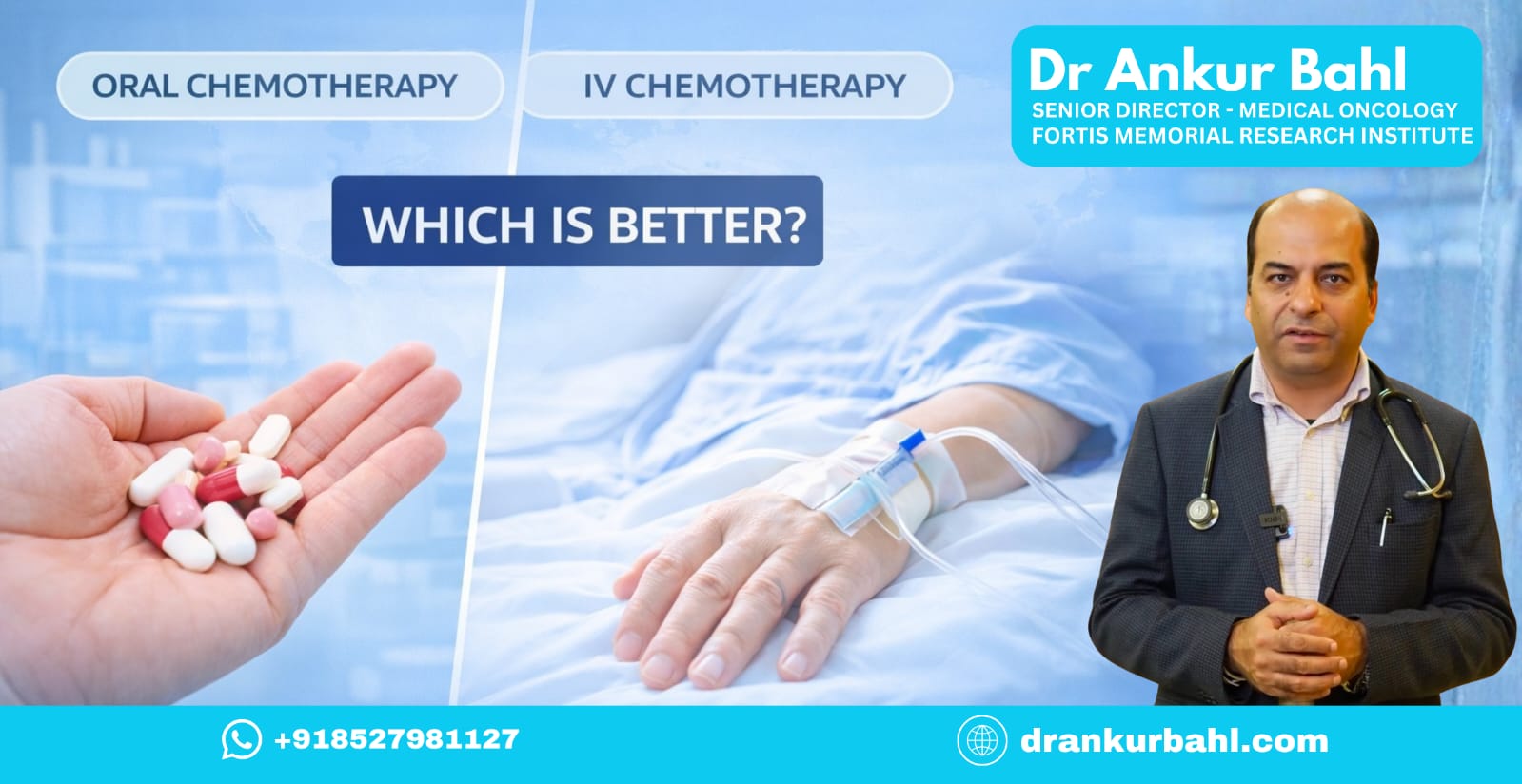
A Complete Patient Guide by Dr. Ankur Bahl
Cancer treatment has evolved tremendously over the last two decades. Earlier, chemotherapy almost always meant hospital visits, IV drips, and long hours in infusion centers. Today, many patients are surprised to learn that chemotherapy can also come in the form of tablets or capsules taken at home.
This raises an important question for patients and families:
Is oral chemotherapy better than IV chemotherapy?
The answer is not always straightforward. Both methods have advantages and limitations, and the right choice depends on cancer type, stage, patient condition, and treatment goals.
In this detailed guide, we will help you understand:
- What chemotherapy is and how it works
- Difference between oral and IV chemotherapy
- Benefits and challenges of both options
- Safety, side effects, and effectiveness
- Which option may be better for you
- Frequently asked patient questions
This article is designed in simple language so patients and caregivers can make informed decisions with their oncologist.
What Is Chemotherapy?
Chemotherapy refers to drugs used to destroy or stop the growth of cancer cells. Cancer cells divide rapidly, and chemotherapy targets these fast-growing cells.
Chemotherapy may be used to:
- Cure cancer
- Shrink tumors before surgery
- Kill remaining cancer cells after surgery
- Control cancer spread
- Relieve symptoms in advanced cancer
Chemotherapy can be delivered in different ways, including:
- Intravenous (IV) infusion
- Oral tablets or capsules
- Injections
- Targeted or immunotherapy combinations
Among these, oral and IV chemotherapy are the most common forms.
What Is IV Chemotherapy?
IV chemotherapy involves administering anti-cancer drugs directly into the bloodstream through a vein.
This is done in:
- Hospitals
- Daycare chemotherapy units
- Specialized infusion centers
Treatment may take several hours and is usually given in cycles every 1–3 weeks.
Common Ways IV Chemo Is Given
- Peripheral IV line in the arm
- PICC line
- Port catheter
- Central venous catheter
The choice depends on treatment duration and drug type.
What Is Oral Chemotherapy?
Oral chemotherapy is taken in pill, capsule, or liquid form at home.
These medicines enter the bloodstream through the digestive system and work similarly to IV drugs.
Oral chemotherapy includes:
- Chemotherapy tablets
- Targeted therapy drugs
- Hormonal cancer therapies
Examples are commonly used in breast cancer, lung cancer, leukemia, and colorectal cancer.
How Do Oral and IV Chemotherapy Differ?
Method of Administration
Hospital Visits
Convenience
- IV chemo: Less convenient but supervised
- Oral chemo: More convenient but needs discipline
Monitoring
Is Oral Chemotherapy as Effective as IV?
Many patients assume IV chemotherapy is stronger because it is given in hospital. This is not always true.
Modern oral chemotherapy drugs can be:
- Equally effective
- Targeted
- Better tolerated in some cancers
Effectiveness depends on:
- Cancer type
- Stage of disease
- Drug used
- Patient response
In some cancers, oral therapy works just as well. In others, IV chemotherapy remains necessary.
Benefits of Oral Chemotherapy
1. Convenience and Comfort
Patients can take treatment at home without frequent hospital visits.
2. Better Quality of Life
Less time spent in hospitals allows patients to maintain routine life.
3. Reduced Travel Burden
Helpful for patients living far from treatment centers.
4. Less Hospital Exposure
Reduced infection risk due to fewer hospital visits.
5. Flexible Scheduling
Patients can continue treatment even while traveling.
Challenges of Oral Chemotherapy
1. Patient Responsibility
Missing doses can reduce treatment effectiveness.
2. Side Effects Still Occur
Oral chemo still causes side effects similar to IV therapy.
3. Monitoring Compliance
Doctors rely on patients to take medicines correctly.
4. Insurance & Cost Issues
Some oral drugs may be expensive depending on coverage.
Benefits of IV Chemotherapy
1. Medical Supervision
Healthcare professionals monitor patients during infusion.
2. Accurate Drug Delivery
Ensures full dose is given properly.
3. Useful for Aggressive Cancers
Certain cancers respond better to IV chemotherapy.
4. Compliance Guaranteed
No risk of missing doses since treatment is supervised.
Challenges of IV Chemotherapy
- Frequent hospital visits
- Time-consuming infusions
- Travel fatigue
- Hospital infection exposure
- Needle discomfort
Side Effects: Oral vs IV Chemotherapy
Both types share similar side effects because drugs affect fast-growing cells.
Common side effects include:
- Nausea and vomiting
- Hair loss
- Fatigue
- Low immunity
- Mouth ulcers
- Diarrhea or constipation
- Skin changes
- Loss of appetite
However, side effects vary by drug, not route.
Modern treatments include supportive medicines to reduce discomfort.
Safety Tips for Oral Chemotherapy Patients
Patients must:
- Take medication exactly as prescribed
- Never skip doses
- Avoid double dosing
- Store medicines safely
- Keep drugs away from children
- Inform doctors about side effects
- Attend regular follow-ups
Family members should use gloves when handling medicines.
When Is IV Chemotherapy Preferred?
IV chemotherapy is often recommended when:
- Cancer is aggressive
- Rapid response is required
- Patient cannot tolerate oral medicines
- Digestive issues prevent absorption
- High-dose therapy is needed
When Is Oral Chemotherapy Preferred?
Doctors may recommend oral chemotherapy when:
- Long-term maintenance therapy is needed
- Patient prefers home treatment
- Cancer is stable or slow-growing
- Targeted therapy is available
Can Patients Switch Between Oral and IV?
Yes. Treatment plans often change based on:
- Treatment response
- Side effects
- Cancer progression
- Patient tolerance
Some patients start with IV therapy and later shift to oral maintenance therapy.
Which Option Is Better?
There is no universal “better” option.
The best choice depends on:
- Type of cancer
- Stage of disease
- Patient health
- Lifestyle needs
- Drug availability
- Doctor’s recommendation
Your oncologist designs treatment for maximum benefit and safety.
Questions to Ask Your Oncologist
Patients should ask:
- Which chemotherapy type is best for me?
- Can oral therapy work in my case?
- What side effects should I expect?
- How often will I need monitoring?
- Can treatment affect daily life?
Clear communication improves outcomes.
Emotional and Lifestyle Considerations
Chemotherapy affects more than just the body.
Patients may face:
- Anxiety
- Fatigue
- Mood changes
- Work-life challenges
Support from family, counselors, and oncology teams helps patients cope better.
The Future of Chemotherapy
Cancer treatment is evolving rapidly with:
- Targeted therapies
- Immunotherapy
- Personalized medicine
- Oral targeted treatments
Future treatments aim to be:
- More effective
- Less toxic
- More convenient
- Personalized to patients
Final Thoughts
Oral chemotherapy offers convenience and flexibility, while IV chemotherapy ensures supervised and sometimes stronger treatment delivery.
Neither is universally better — the right choice depends on individual medical needs.
Patients should focus on:
- Following treatment properly
- Maintaining regular follow-ups
- Reporting side effects early
- Staying positive and supported
The goal of chemotherapy is not only to fight cancer but also to maintain quality of life.
Always trust your oncologist’s guidance in choosing the most suitable treatment approach.